Rice has been at the heart of India’s agriculture, diet, economy, and cultural identity for centuries. For more than 60 percent of the population, rice is a staple food — appearing daily on millions of plates from simple meals to festive feasts. Yet this essential grain is at the centre of a deepening climate challenge, creating a vicious feedback loop: rice cultivation contributes significantly to climate change, and the changing climate, in turn, threatens rice production and the livelihoods that depend on it.
The Importance of Rice in India’s Food System
Rice is not just a crop in India — it is a lifeline. As a staple food, it provides the primary source of calories for a vast part of the population. India is one of the world’s largest producers and consumers of rice, with cultivation spanning tens of millions of hectares nationwide. The grain supports food security for both rural households and urban consumers, and it plays a key role in national food programmes.
Yet, while rice ensures sustenance for millions, it also places heavy demands on land, water, and farming systems that are increasingly stressed by climate change. Its dominance in Indian diets and agriculture makes both the country and its people deeply vulnerable to threats from changing climate patterns.
Rice Cultivation: A Hidden Climate Driver
Rice production may feed people, but it also fuels climate change. Traditional rice cultivation is water‑intensive and involves flooding fields for extended periods. These flooded conditions create anaerobic (oxygen‑free) soil environments that are ideal for microbes to produce methane, a potent greenhouse gas with far more warming impact per unit than carbon dioxide. Globally, rice is estimated to contribute a measurable share to human-induced greenhouse gas emissions, partly through methane emissions from paddies.
In India, rice fields generate substantial methane and nitrous oxide emissions — both powerful contributors to atmospheric warming — making rice cultivation a significant source of agricultural greenhouse gases.
Climate Change Is Hitting Rice Where It Hurts
Not only does rice contribute to climate change — climate change now threatens rice itself. Rising temperatures, prolonged droughts, unpredictable monsoons, and extreme weather events are increasingly common across India’s rice belts. Scientific projections indicate that climate change could reduce rice yields significantly by mid-century, with higher temperatures and reduced water availability undermining crop productivity and resilience.
These shifts jeopardise food security for millions of smallholder farmers and consumers. Agriculture in India already depends heavily on monsoon patterns, and disruptions in rainfall due to climate change can lead to water shortages, reduced yields, and even crop failure. As the climate warms further, rice production systems that evolved under more stable conditions are becoming less reliable.
Water Crisis: The Hidden Cost of Rice Dominance
Rice cultivation is extremely water‑intensive, consuming far more water per kilogram of grain than many other crops. In India’s major rice-producing states like Punjab and Haryana, groundwater extraction for irrigation has accelerated dramatically over recent decades, with aquifer levels falling sharply. Farmers now often have to drill much deeper borewells to access water that once lay at shallow depths.
This over-extraction creates serious sustainability concerns, transferring ecological debt to future generations and threatening long-term water availability for both agriculture and drinking purposes. As climate change affects rainfall and river flows, water scarcity is likely to worsen, further straining India’s food systems and rural economies.
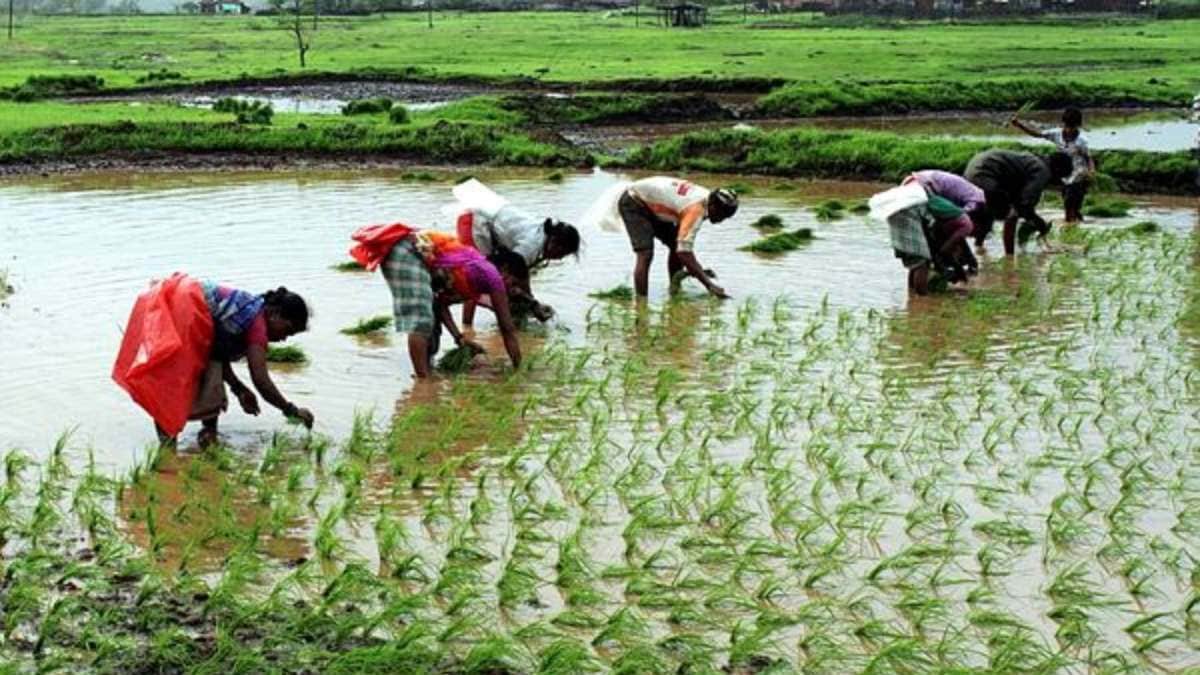
Paddy Fields and Greenhouse Gases: The Methane Effect
The flooded conditions required for traditional rice cultivation create ideal environments for methane-producing microbes. Methane is a short-lived but extremely potent greenhouse gas — far more effective at trapping heat than carbon dioxide in the short term.
India’s vast rice cultivation footprint amplifies this effect, making methane emissions from paddy fields a key contributor to the country’s agricultural greenhouse gas profile. The methane produced from these fields traps heat in the atmosphere, accelerating warming and feedback loops that adversely affect rice production and wider climate systems.
From Monoculture to Climate Stress: Health of Soils and Ecosystems
Rice’s dominance in India encourages monoculture farming — growing the same crop repeatedly over large areas year after year. While monoculture can simplify farming operations, it often leads to soil nutrient depletion, increased dependence on chemical fertilizers, and higher susceptibility to pests and diseases. Over time, the health of soils declines, reducing productivity and increasing reliance on inputs that further harm the environment.
Coupled with pesticide use and flood irrigation, rice monoculture threatens soil quality, water quality, and local biodiversity, making farming communities even more vulnerable to climatic and ecological changes.
Innovation and Adaptation: Can Rice Be Part of the Solution?
Despite the challenges, sustainable solutions are emerging. Climate-smart rice systems — including alternate wetting and drying, direct seeding, and regenerative rice farming — reduce water use and methane emissions while maintaining yields. These practices encourage more efficient use of water and energy, lower greenhouse gas emissions, and build climate resilience.
In addition, developing rice varieties that require less water or emit fewer greenhouse gases offers another path forward. Scientific breeding and improved agronomic techniques can help mitigate climate impacts while protecting yields and farmer incomes. These innovations signal that rice can still play a role in India’s food system without exacerbating climate stress.
A Bleak But Actionable Future for India’s Rice Sector
India’s rice problem — both as a climatic contributor and a crop feeling climate pressure — presents enormous challenges. If current trends continue, rice yields could decline significantly due to heat stress and water scarcity, threatening food security for millions of people. Meanwhile, rice-driven emissions will continue to contribute to warming worldwide.
However, the adoption of climate-resilient cultivation methods, coupled with supportive policies that encourage crop diversification, sustainable water management, and emission-reducing practices, can pave a path toward a more climate-friendly rice sector. Only through coordinated climate action — from farmers, scientists, policymakers, and consumers — can India navigate this “rice or ruin” moment and build a resilient food future.
Conclusion
Rice remains deeply woven into India’s culture and food security. Yet its traditional cultivation methods now mirror the very climate crisis threatening the grain itself. Rice cultivation contributes significantly to greenhouse gases and water depletion, while changing climate patterns threaten yields and livelihoods.
To break this climate loop, India must transform rice production through sustainable and climate-smart practices, resilient crop varieties, and policies that support environmental stewardship. Only then can rice remain a source of nourishment — not a fuel for the climate crisis.
totosecom.com totosecom.com totosecom.com totosecom.com totosecom.com totosecom.com totosecom.com totosecom.com totosecom.com totosecom.com totosecom.com totosecom.com totosecom.com totosecom.com totosecom.com totosecom.com totosecom.com totosecom.com totosecom.com totosecom.com totosecom.com totosecom.com totosecom.com totosecom.com totosecom.com totosecom.com totosecom.com totosecom.com totosecom.com totosecom.com totosecom.com totosecom.com totosecom.com totosecom.com totosecom.com totosecom.com totosecom.com totosecom.com totosecom.com totosecom.com totosecom.com totosecom.com totosecom.com totosecom.com totosecom.com totosecom.com totosecom.com totosecom.com totosecom.com totosecom.com totosecom.com totosecom.com totosecom.com totosecom.com totosecom.com totosecom.com totosecom.com totosecom.com totosecom.com totosecom.com totosecom.com totosecom.com totosecom.com totosecom.com totosecom.com totosecom.com totosecom.com totosecom.com totosecom.com totosecom.com totosecom.com totosecom.com totosecom.com totosecom.com totosecom.com totosecom.com totosecom.com totosecom.com totosecom.com totosecom.com totosecom.com totosecom.com totosecom.com totosecom.com totosecom.com totosecom.com totosecom.com totosecom.com totosecom.com totosecom.com totosecom.com totosecom.com totosecom.com totosecom.com totosecom.com totosecom.com totosecom.com totosecom.com totosecom.com totosecom.com totosecom.com totosecom.com totosecom.com totosecom.com totosecom.com totosecom.com totosecom.com totosecom.com totosecom.com totosecom.com totosecom.com totosecom.com totosecom.com totosecom.com totosecom.com totosecom.com totosecom.com totosecom.com totosecom.com totosecom.com totosecom.com totosecom.com totosecom.com totosecom.com totosecom.com totosecom.com totosecom.com totosecom.com totosecom.com totosecom.com totosecom.com totosecom.com totosecom.com totosecom.com totosecom.com totosecom.com totosecom.com totosecom.com totosecom.com totosecom.com totosecom.com totosecom.com totosecom.com totosecom.com totosecom.com totosecom.com totosecom.com totosecom.com totosecom.com totosecom.com totosecom.com totosecom.com totosecom.com totosecom.com totosecom.com totosecom.com totosecom.com totosecom.com totosecom.com totosecom.com totosecom.com totosecom.com totosecom.com totosecom.com totosecom.com totosecom.com totosecom.com
