Pakistan is at a critical crossroads. Once hailed as a potential economic hub of South Asia due to its young population, strategic location, and rich resources, it is now facing an unprecedented corporate exodus. Multinational companies are shutting down operations, foreign direct investment is shrinking, and the country is struggling with deepening poverty and instability.
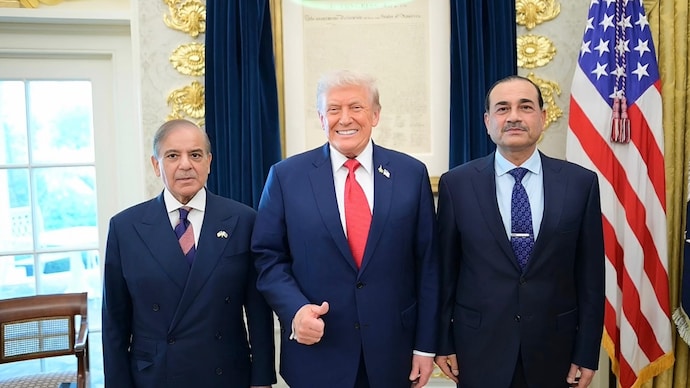
Amid this crisis, Pakistan has found itself selling the only asset left that global powers want — its land and natural resources. In this process, former U.S. President Donald Trump has emerged as one of the biggest beneficiaries, sealing deals for rare earth minerals in Balochistan.
Multinationals Exit Pakistan: A Bleak Picture
Over the last few years, the list of companies leaving Pakistan has grown alarmingly long:
-
Procter & Gamble left after 30 years.
-
Microsoft shut down after 25 years.
-
Shell sold its stake and exited.
-
Uber, Careem, Pfizer, Bayer, Sanofi and others followed.
The exodus highlights that Pakistan is no longer an attractive market. For multinationals, the combination of political instability, currency controls, security concerns, and declining consumer demand has made operations unsustainable.
idoov.com | clearpointlogisticsgh.com | bakerfqo.com
apktowns.com | atlantaescortsblog.com
Why Are Companies Leaving?
-
Political Uncertainty – Frequent government changes and shifting policies create instability.
-
Currency Depreciation – Profits are trapped in rupees, which are losing value rapidly.
-
Taxation Chaos – Around 30 different corporate taxes make doing business a bureaucratic nightmare.
-
Energy Shortages – Constant power crises disrupt industries.
-
Declining Consumer Power – With 42% of the population below the poverty line, demand for products is collapsing.
Pakistan vs Neighbours: A Harsh Reality
When compared to its regional competitors, Pakistan’s performance in attracting investment looks dismal.
| Country | Population (Millions) | FDI Inflow (USD Billion) |
|---|---|---|
| India | 1,400 | 70 |
| Vietnam | 100 | 23 |
| Bangladesh | 170 | 3.4 |
| Pakistan | 216 | 0.68 |
Despite having one of the largest populations in the world, Pakistan attracts less than 1 billion USD in foreign direct investment — a fraction of its neighbours.
China’s Long Game: CPEC and Gwadar
China has already secured significant control over Pakistan’s land and resources.
-
Over 2,000 acres of Balochistan land have been leased to China.
-
Gwadar Port, a strategic entry point into the Arabian Sea, has been leased for over 40 years.
-
China enjoys tax exemptions and operational control, effectively running entire zones as its own.
While this is framed as development under the China-Pakistan Economic Corridor (CPEC), local communities see little benefit. Instead, they face displacement, restricted access, and growing inequality.
Trump’s Entry: The Biggest Landlord
In 2025, Pakistan courted Donald Trump with a new strategy — selling its mineral wealth.
-
Pakistan’s military-controlled Frontier Works Organisation signed a $500 million memorandum with US Strategic Metals, a Missouri-based company linked to Trump.
-
The deal gives Trump access to rare earth minerals in Balochistan, critical for high-tech industries, electric vehicles, and defense systems.
-
With this, Trump outplayed China, emerging as Pakistan’s biggest land grabber.
Why Is This Significant?
-
Rare earth minerals are the “new oil” — essential for global technology supply chains.
-
By securing this deal, Trump ensures American access to critical minerals while reducing Chinese dominance.
-
For Pakistan, however, it means surrendering even more sovereignty.
Balochistan: Rich Land, Poor People
Balochistan is Pakistan’s most resource-rich province, holding reserves of gas, copper, gold, and rare earths. Yet, it is the poorest region in terms of human development.
-
Ports leased to China.
-
Mines emptied for foreign powers.
-
Local communities fenced off from their own lands.
While billions of dollars are being signed away, the people of Balochistan live without access to proper healthcare, education, and jobs. This stark contrast exposes the exploitation at the heart of Pakistan’s land deals.
Sovereignty for Sale
Pakistan has moved from selling itself as a market for goods to selling itself as land for extraction.
-
China controls ports and highways.
-
Trump controls rare earth minerals.
-
Locals control nothing.
The key question is not whether this model is sustainable — it is what will be left of Pakistan when the land itself is gone.
Geopolitical Implications
-
China vs USA Rivalry – Pakistan has become a new battlefield for influence between Washington and Beijing.
-
India’s Advantage – As Pakistan collapses economically, India continues to rise as a stable investment hub.
-
Regional Instability – Exploitation of Balochistan’s resources without local benefits fuels separatism and unrest.
-
Trump’s Global Comeback – With this land deal, Trump positions himself not just in American politics, but as a global economic player.
Conclusion
Pakistan’s corporate collapse, combined with its desperate sale of land and resources, paints a grim picture. Multinationals no longer see it as a viable market, and foreign powers are treating it as a resource colony.
China has ports and highways. Trump has rare earth minerals. Meanwhile, the people of Pakistan — especially in Balochistan — are left with poverty, fences, and broken promises.
The real tragedy is not just the loss of companies or minerals, but the erosion of sovereignty itself. When a country is reduced to selling its soil, the question is no longer about economics. It becomes a matter of national survival.
